Archives → Activity

Magic Vs - Year 5 Lesson
 Today I had the fun of 20 Year 5 students in my classroom. I used the Magic Vs problem from NRICH. NRICH have lots of good leading questions, solution discussions and videos. There was lots of great thinking and discussion.
I made a SMART Notebook file to aid the discussions, available on MathsFaculty.
Percentages Foldable
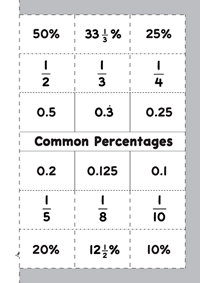 I recently made a Percentages Foldable (common percentages and their fraction and decimal equivalences) to include in our school newsletter. The idea was to encourage students (or parents) to make the foldable and put it on the fridge, or somewhere else prominent, to encourage the remembering of some common percentage comversions.
Relative Frequency - Investigation
Probability is one of those topics where it's best to "see it".
Square Design
I found this design on a photocopied worksheet from an old textbook, but I don't know which, so cannot credit.
(If you know the source, please let me know)
End of Term 9 - world’s best paper airplane
I think I just found the activity for the last period on the last day of the year.
Preparing to Engage, Enhance and Extend
I am presenting twice in September about how I use technology to engage, enhance and extend in my teaching.
Activity - Atlantis and Hubble in front of the Sun
If we can determine the altitude of a plane in front of the moon, why not try the altitude of the Space Shuttle Atlantis in front of the Sun?
Activity- Airplane in front of the moon
Back in 2011, Nordin Zuber posted this found image on MathsLinks.
Number of the day
Here's a starter activity I have built on MathsStarters: Number of the day.
Classifying Data - Foldable
Here’s a second foldable for the Preliminary (Year 11) General Mathematics course for the topic DS1 Statistics and society, data collection and sampling.
This second foldable is about classifying data.
Statistical Inquiry Foldable
I’m trying to make the time to create foldables to use with my Year 11 General Mathematics class. The topic DS1 Statistics and society, data collection and sampling lends itself to foldables.
The first foldable is for the process of statistical inquiry:
posing questions, collecting data, organising data, summarising and displaying data, analysing data and drawing conclusions, and writing a report
Number Sense Posters
For a few years, I’ve noticed that kids not only don’t know/struggle with their times tables, but also general ‘number sense’.
Random
The “automatic simple random number generator” on MathsStarters got a little fix-up today.
Series Foldable
For “Arts and Crafts Thursday”* we made a foldable to summarise the formula in the topic Series and Applications (Topic 7 in the NSW BOS Mathematics Syllabus).
MathsClass This Week 2 December 2012
 Nearing the end of the year, I’ve updated a previous MathsClass blog post from 2008 with additional supporting material to make this nice design. Files available on MathsFaculty.
There are other end of term activities on MathsClass and design activities on MathsFaculty.
Times Tables Grid Wall Poster (Made4Math)
It’s the last day of term here, so teachers might want to spend some time today fixing up their room. So, I brought my Made4Math Monday forward.
I needed some times table posters for my classroom, but the posters you can buy tend to be for younger students and I haven’t seen a grid version (rather than each table listed separately).
Rules for Differentiation - Foldable (Math4Math)
A foldable for reviewing the Rules of Differentiation. Click the preview to see the full version.
Functions and Quadratics Foldables (Made4Math #1)
Year 11 Mathematics have one of their three periods a week, last period on Fridays. Of course, they’re not highly motivated at that time.
The other week, we folded parabolas, I called it “Arts and Craft Friday”.
The next week, they surprised me by asking what we were doing for “Arts and Craft Friday”... I had nothing!
New on MathsStarters… Bingo!
I reckon Maths Bingo is a great starter, ender or in-betweener…
Code Breaking
I recently received an email from the AAMT:
National Mathematics Day is Friday 18 May and looks at codes and code-breaking — to celebrate the centenary of the birth of Alan Turing.
Superman Number Plane Logo
A number plane drawing worksheet for making the Superman logo. Included in the file (see below) is a page with a suitable coordinate grid.
Car Racing
Playing with the kids’ toys on the weekend, I came across this car and became interested by the relationship between pulling it back and how far it would travel.
Was it a linear relationship or something else?
What if the largest states of Australia had the biggest populations?
You might have seen this map featured around the place recently:
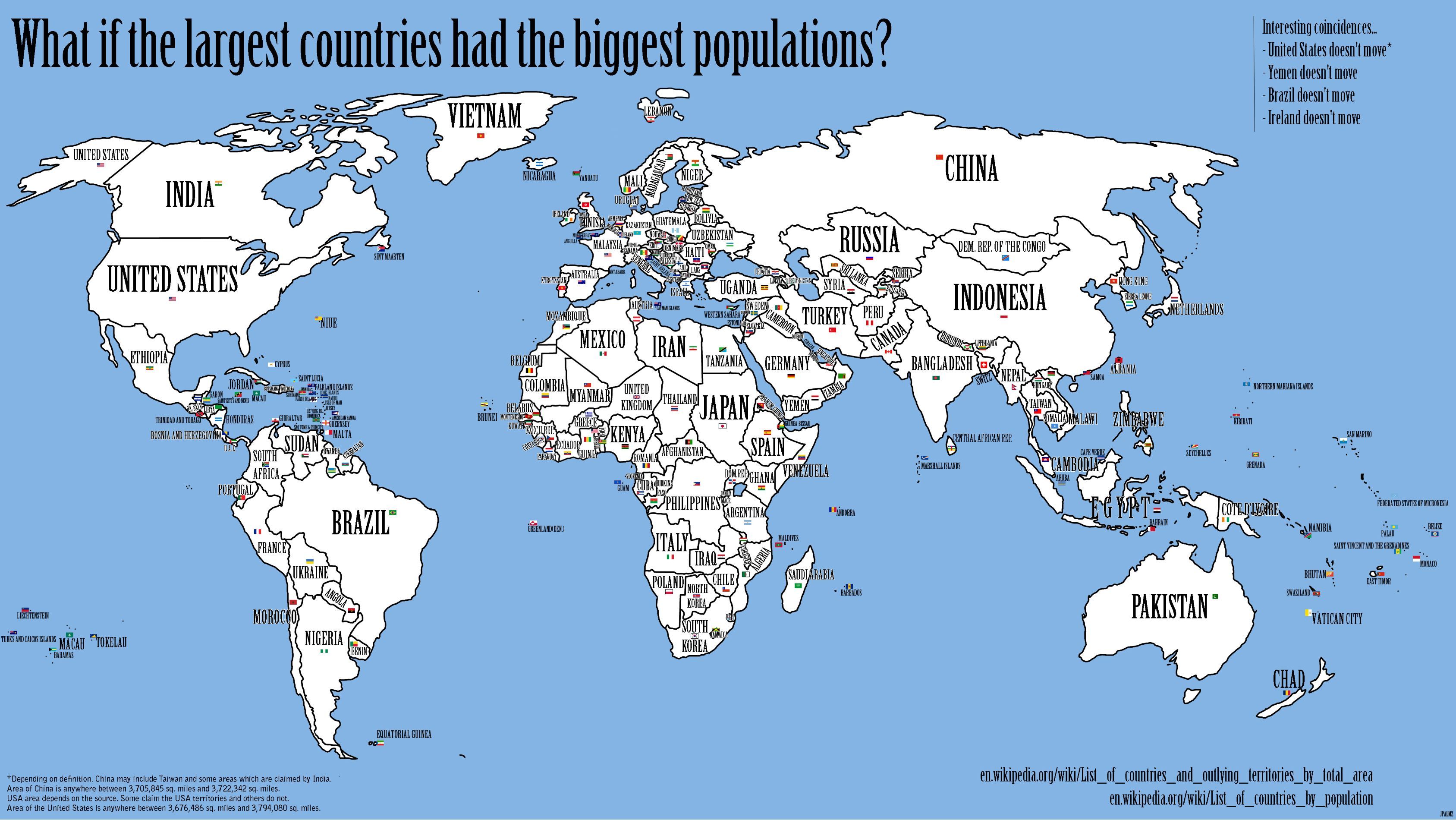
So I wondered, what if the largest countries had the biggest populations?
End of Term 7
The end of term series of posts are some of the most popular on this site.
Pythagoras Outside
This is a fairly simple activity that allows for something different in the teaching of Pythagoras’ Theorem.
The Land of Algerb
Starting Algebra with Year 8, we spend a couple of lessons on various “algebraic techniques”. I’ve been trying to find some activities which provide a little more engagement. I created “The Land of Algerb“ to explain multiplying pronumerals.
End of term activities 6
The end of term/year often brings lots of disruptions. So, as much as I like to keep teaching till the end, some days require something a little different. I like hands-on quasi-mathematical activities that allow every student to engage with and complete. And on Thursday, just before having one of those disrupted days, I found this…
Making a matching activity
As I mentioned, the DER roll-out hit my classroom as we were in the midst of Algebra. Due to a tight program and exams shortly, I had to stick with a couple of topics which don’t really allow for “play” on the laptops as much as I would have liked.
A lot of the Algebra taught at the Stage 4 level is technique, and so matching activities work particularly well to practise and review skills.
Here’s a review of some of the ways I’ve found to make matching activities for use on the laptops.
End of term activities 5 - Patterns
Tomorrow is the last day of term… hurray! Here’s another end of term activity for use with your maths class.
Brisbane Broncos Number Plane Logo
Last year, I posted the Melbourne Storm Number Plane Logo – and today, exactly one year later, purely by coincidence, I’ve made a Brisbane Broncos Number Place activity.
A story for Trigonometry
A really easy way to create engagement when introducing a new topic is to explain some of it’s applications outside of the maths classroom. For Trigonometry, I use an explanation of how I used trigonometry in a previous career to find the height of trees.
Equal areas in a circle
Trying to motivate Year 10 after the School Certificate Exams are completed is tough. I like to use geometric design activities. Whilst they seem like “fun”, or at least non-taxing on the brain – they get the students following a procedure, using geometric instruments and can be lead to a good discussion about the Mathematics of design.
Melbourne Storm Number Plane Logo
Around this time each year, our programs have Year 8 and Year 10 looking at the Number Plane. For the end of the term, it’s nice timing, because it allows us to draw some pictures on the number plane. One favourite is the logos of various
teams.
Perpendicular lines activity
This simple design activity could be used as something extra whilst Year 7 are using geometric instruments and learning about perpendicular lines. Or, as a stand-alone activity.
Estimating length
When looking at measurement, year 7 measure “body units” and use them to measure things in the classroom, as an example of estimating. Then, when we move onto perimeter, we come back to one body unit, the pace.
Profit, a story
Starting a lesson on profit and loss with this story, quickly introduces some key concepts and we have a bit of fun.
End of term activities 2
It’s been two terms since my last post on this blog, End of term activities. So, as I return to this blog at the end of the year, here are some more “last day” type activities.

End of term activities
For the last day of term, lessons may not follow a normal program, however they can still be engaging and mathematics related.
Heart Rate Activity
An outdoors activity is always a welcome change to a maths lesson. To introduce rates, I take the class outdoors to measure their heart rate.
New Subscribe to the …
MathsLinksemail newsletter
Get updates…
About
Simon Job — eleventh year of teaching maths in a public high school in Western Sydney, Australia.
MathsClass is about teaching and learning in a maths classroom. more→
Archive
Elsewhere
 @simonjob
updates via @mathslinks
Recently read/found.
Being a Vector is not Mutually Exclusive – Ringo Mok
maths vectorsInstagram
Gcf howie_hua maths